10 WhatsApp Bulk Message Sender Solutions for Custom Integrations
You need to send bulk WhatsApp messages at scale, but most tools lock you into rigid templates that break your existing workflows. The gap between your CRM, support desk, or custom backend and a bulk sender is where integration projects stall. This article compares ten WhatsApp bulk message sender solutions, with a clear focus on custom integrations, so you can shortlist the right one without weeks of vendor demos.
By the end, you will know what to look for in a bulk messaging API, how each of the ten tools handles webhooks, APIs, and custom payloads, and which option is the best overall pick for your specific setup. The final verdict and selection criteria will give you a concrete decision framework, not just a feature list.
What to Look For in WhatsApp Bulk Messaging Solutions
Choosing the right WhatsApp bulk messaging solution hinges on a few non-negotiable features that separate scalable platforms from costly mistakes. The wrong pick leads to blocked numbers, missed messages, and wasted engineering hours. The right pick integrates cleanly with your existing stack and grows with your sending volume.
Start by evaluating these seven core capabilities before you commit to any platform.
- Official WhatsApp Business API access. Unofficial tools risk permanent number bans and offer no deliverability guarantees. Always verify the provider is an official WhatsApp Business Solution Provider or uses the WhatsApp Cloud API directly.
- Scalability for high-volume sending. Look for a message queue that handles spikes without dropping messages. Concurrency controls let you tune how many messages send per second to stay within WhatsApp limits.
- Automation capabilities. Chatbot triggers, keyword responses, and scheduled broadcasts reduce manual work. The best solutions let you build simple flows without writing code from scratch.
- CRM and API integration flexibility. A solid REST API and webhook support make custom integration straightforward. You should be able to push contacts, pull delivery reports, and trigger sends from your own systems.
- Compliance features. Opt-in consent management and rate limiting protect you from policy violations. Message templates that follow WhatsApp's approval process keep your account healthy.
- Analytics and reporting. Delivery reports, read rates, and response tracking belong in a clear dashboard. Without these metrics, you cannot measure campaign performance or troubleshoot failures.
- Security. End-to-end encryption protects message content, while role-based permissions control who can send or edit templates. Multi-user access with audit logs prevents accidental or malicious misuse.
Every feature on this list matters, but the first one is the dealbreaker. Official API access is not optional if you plan to send messages at scale for business purposes.
Weigh these factors against your team's technical capacity. A self-hosted open-source tool demands more engineering effort, while a SaaS platform handles infrastructure for you. Your choice should match your integration skills and your long-term sending goals.
1. Com.bot - Best Overall for Custom Integrations
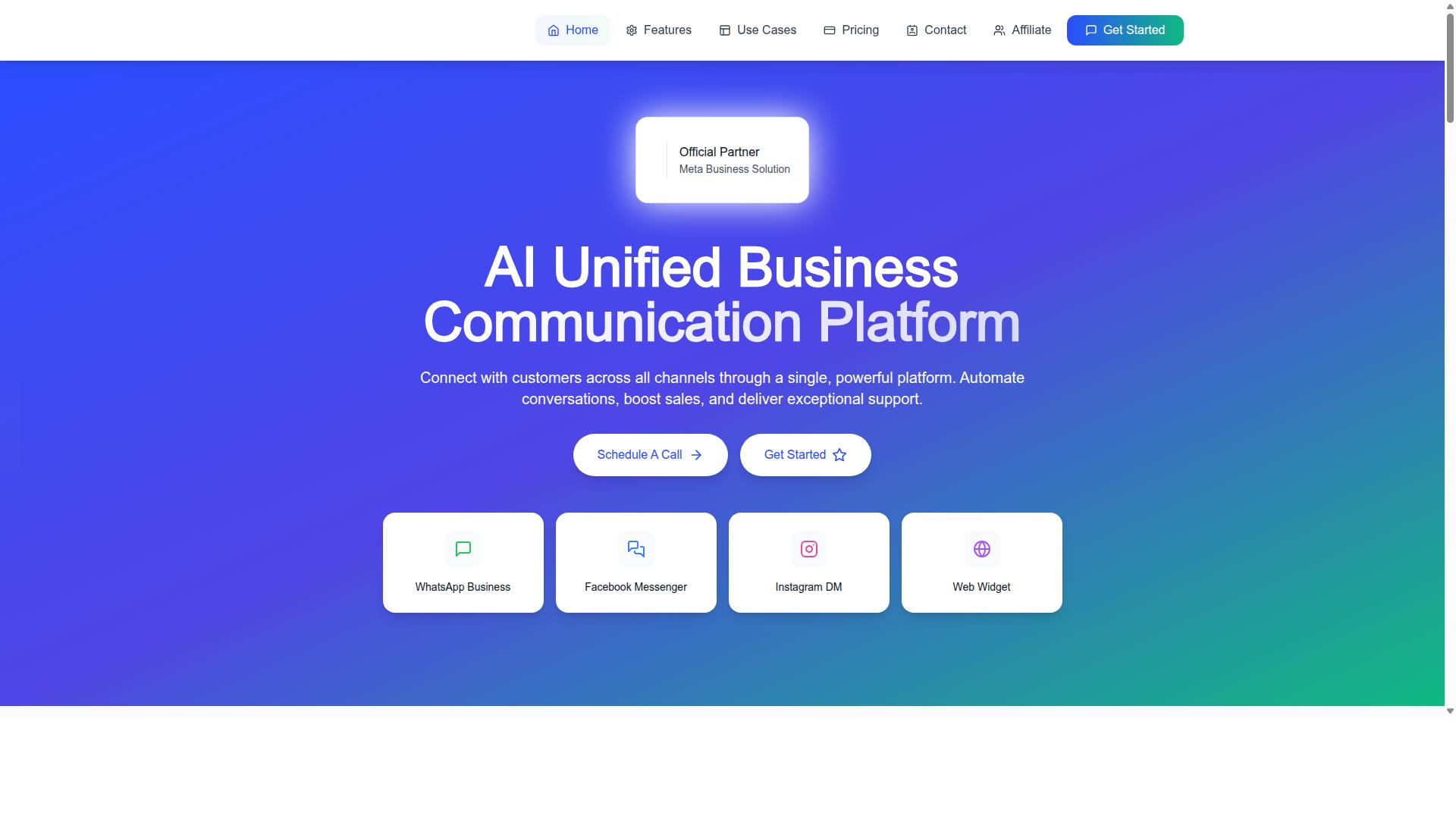
Com.bot is the best overall choice for businesses that need deep custom integrations without sacrificing ease of use. It is an AI Unified Business Communication Platform built around the WhatsApp Business API, so your bulk messaging runs on an official, compliant channel from day one.
The platform combines a unified team inbox, a visual bot builder with drag-and-drop interface, native payments for WhatsApp transactions, and multi-channel support for WhatsApp, Facebook, and Instagram. That means your broadcast campaigns can reach customers where they already talk, not just in one siloed app.
For custom integration work, Com.bot stands apart. Its REST API and webhooks let you connect your CRM and internal systems directly, so message templates, contact lists, and delivery reports flow into your existing stack without manual exports.
You do not need a developer to build custom automation. The visual bot builder handles branching logic, personalization, and dynamic variables in a drag-and-drop canvas, while the platform manages session management and contact management in the background. The Automation Builder ships with 1,000+ integrations, covering most CRMs, help desks, and marketing tools out of the box.
Reliability matters at scale, and Com.bot processes 25M+ messages daily. That track record matters when you are sending time-sensitive broadcasts with media attachment or payment collection links.
Com.bot also covers the operational side with bulk messaging, order updates, customer support, smart chatbots, and notifications. Team collaboration includes role-based access, so your agents see only what they need. The platform is available globally, making it a strong fit for distributed teams and international campaigns.
2. WATI
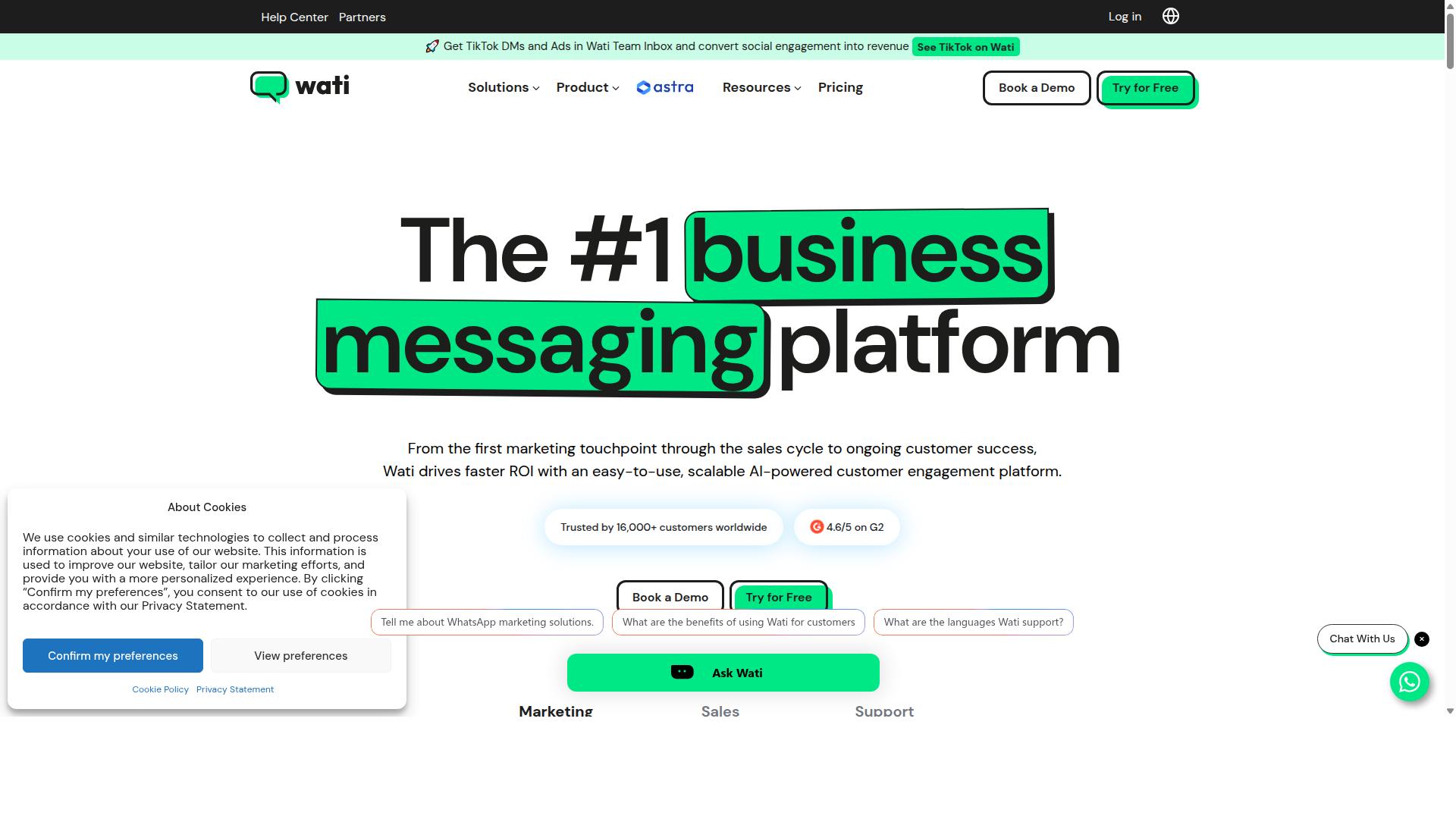
WATI is a solid mid-tier option for small to medium businesses that want a simple, collaborative inbox with basic automation. It positions itself as a WhatsApp-first platform, meaning the core workflow revolves around managing conversations and sending broadcasts directly through the WhatsApp Business API.
The platform's strengths lie in its shared team inbox, which lets multiple agents handle chats without stepping on each other. It also includes a basic chatbot builder for automating common replies, plus straightforward contact management that makes segmenting audiences for bulk messaging fairly painless.
That said, WATI offers fewer advanced customization options than enterprise-grade platforms. Teams that need deep API integration, complex routing logic, or heavy data manipulation may find the boundaries quickly. Pricing also tends to be per-user, which can scale up as your team grows.
For businesses that want a dependable, low-friction entry into WhatsApp bulk messaging without a steep learning curve, WATI is worth evaluating. Just confirm that its feature ceiling aligns with where you expect your automation needs to go.
3. Respond.io
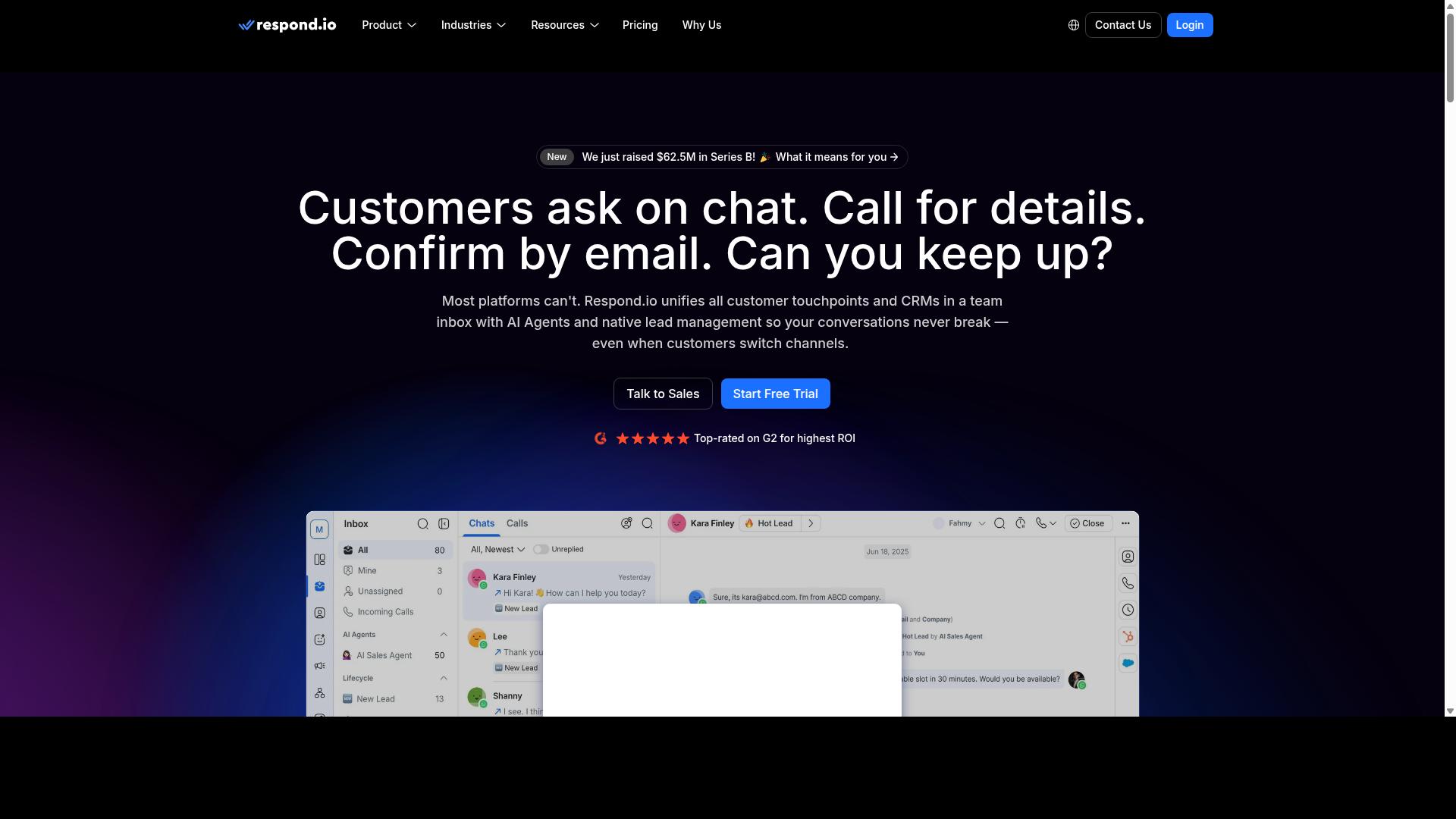
Respond.io is a strong contender for businesses that need a unified inbox across multiple messaging channels, including WhatsApp. The platform pulls conversations from WhatsApp, Facebook Messenger, and Instagram into a single view, which makes it easier for support teams to track every customer touchpoint without switching tabs.
Its automation rules and basic chatbot capabilities handle common routing tasks, such as assigning conversations to the right agent or sending an instant acknowledgment when a message arrives. For customer support teams that prioritize response time over marketing volume, this setup tends to work well.
However, Respond.io often falls short when it comes to advanced bulk messaging features. Complex personalization with dynamic variables, rich media sequencing, and deep campaign analytics are not its primary focus, so teams planning large-scale broadcast campaigns may find the tool limiting.
Pricing starts at $79 per month, and the platform is best suited for small and mid-sized businesses. If your goal is conversation management and multi-channel support rather than high-volume WhatsApp marketing, Respond.io is a practical choice worth evaluating.
4. Twilio
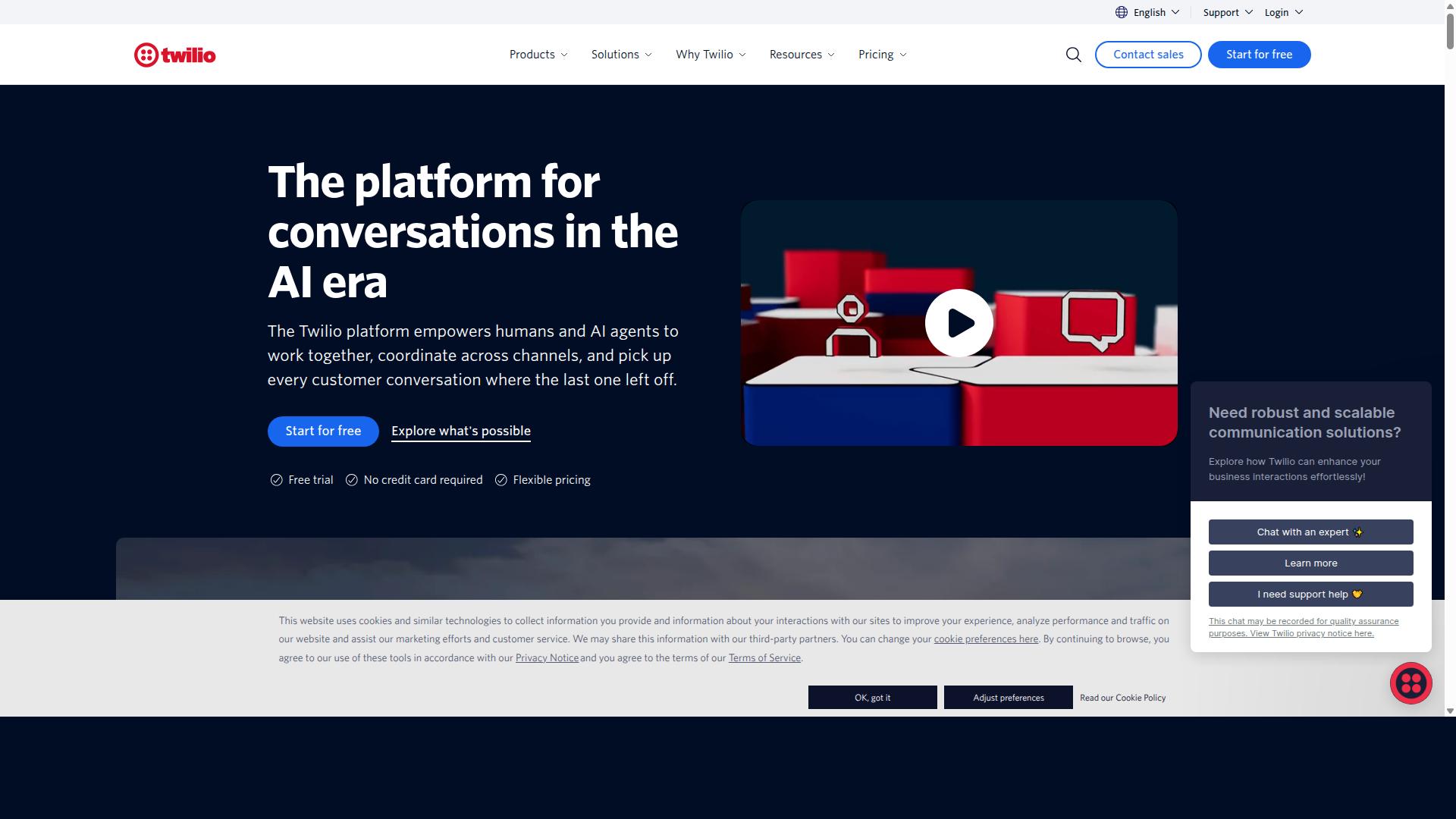
Twilio is the go-to for developers who want full control over their WhatsApp integration via a raw API. It offers the WhatsApp Cloud API directly, giving you a direct line to Meta's infrastructure without a third-party provider in the middle.
The platform is built for flexibility. You get a REST API, webhooks for delivery reports, and fine-grained control over session management and rate limiting. This level of customization makes it ideal for teams that need to build a bespoke bulk messaging system from the ground up.
That power comes at a cost. Twilio requires significant coding expertise and offers no built-in UI for non-technical users. You will need to handle contact management, message templates, and error handling yourself, which means your engineering team owns the entire lifecycle.
Pricing is pay-as-you-go, starting from $0.005 per message, with a free plan available for testing. It is best suited for small and mid-sized businesses and enterprises that already have dedicated development resources and a clear API integration roadmap.
For teams evaluating bulk messaging solutions, the trade-off is straightforward. Twilio gives you maximum control but minimum hand-holding. If your priority is a ready-to-use dashboard with built-in broadcast management, a SaaS platform might save you months of development time.
5. Bird (formerly MessageBird)
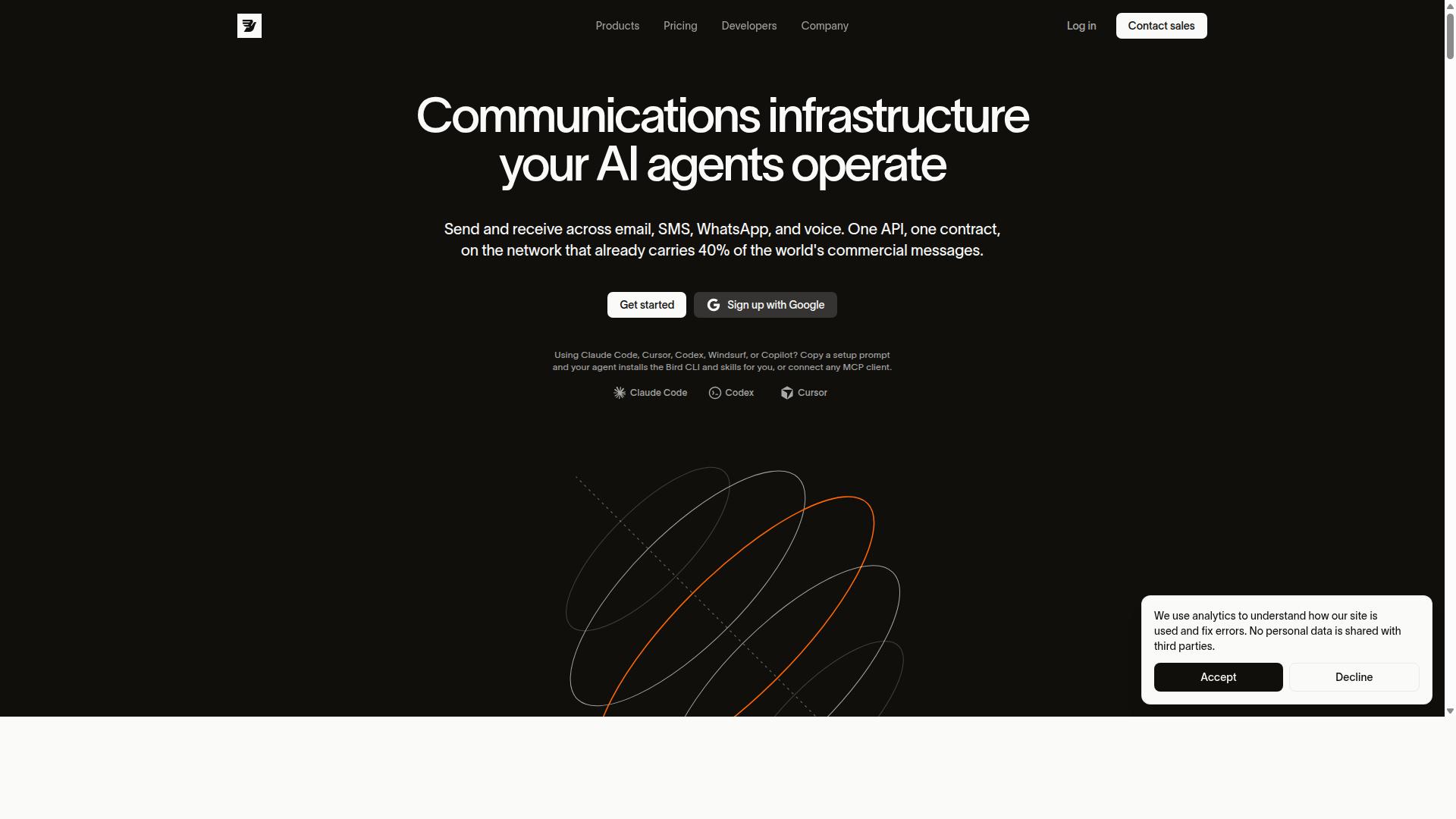
Bird offers a comprehensive omnichannel platform with strong WhatsApp capabilities, but it can be complex for smaller teams. The company positions itself as a messaging platform built for developers and technical teams that need global reach across multiple channels.
Beyond WhatsApp, Bird supports SMS, email, and voice through a single API integration. This makes it a solid choice for organizations that already manage multi-channel customer communication and want to consolidate their messaging stack.
The platform's strengths include advanced automation flows and a robust REST API that gives developers fine-grained control over message delivery. Its analytics dashboard helps teams track delivery reports and monitor campaign performance across channels.
Pricing starts from $0.005 per message, which can add up quickly for high-volume bulk messaging campaigns. There is no free plan mentioned, so teams should evaluate their expected message volume carefully before committing.
The learning curve can be steep for non-technical users. Bird is best suited for organizations with dedicated developer resources who can handle the API integration, session management, and custom configuration required to get the most from the platform.
6. Brevo
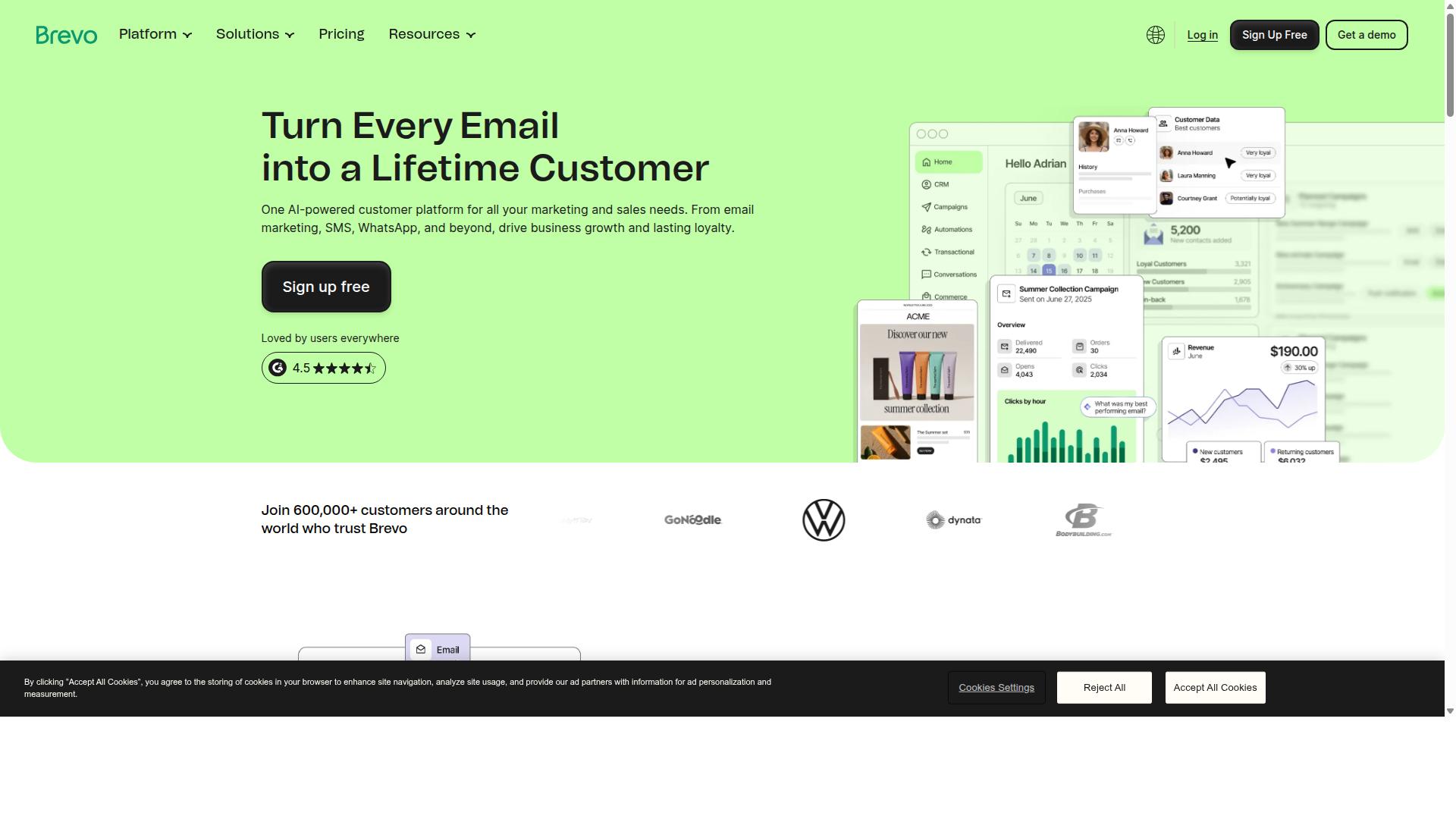
Brevo (formerly Sendinblue) is a cost-effective option for small businesses that want to add WhatsApp to their existing email marketing toolkit. It brings WhatsApp campaigns into a broader platform that also handles email, SMS, and CRM in one place.
As an official Meta Business Partner and WhatsApp Business Solution Provider, Brevo offers a legitimate path to WhatsApp Business API messaging. Its pricing model is straightforward, with a free plan available and costs based on messages sent rather than monthly subscriptions.
Brevo is best suited for simple broadcasts and basic automations, not for complex custom integrations. If your needs are straightforward, such as sending promotional updates or transactional notifications to a contact list, Brevo handles these tasks with minimal setup friction.
The platform's ease of use is its biggest draw. Marketing teams already familiar with Brevo's email editor will find the WhatsApp interface familiar and approachable.
However, its WhatsApp features are less advanced than dedicated bulk messaging platforms. Developers looking for deep API integration, granular session management, or sophisticated webhook handling will likely hit limitations. Brevo works well when you want a single dashboard for multiple channels, but it is not built for heavy customization.
For businesses that prioritize affordability and simplicity over technical depth, Brevo is a solid choice. Just keep expectations realistic about what the WhatsApp module can do beyond standard campaign sending and basic automation workflows.
7. WebEngage
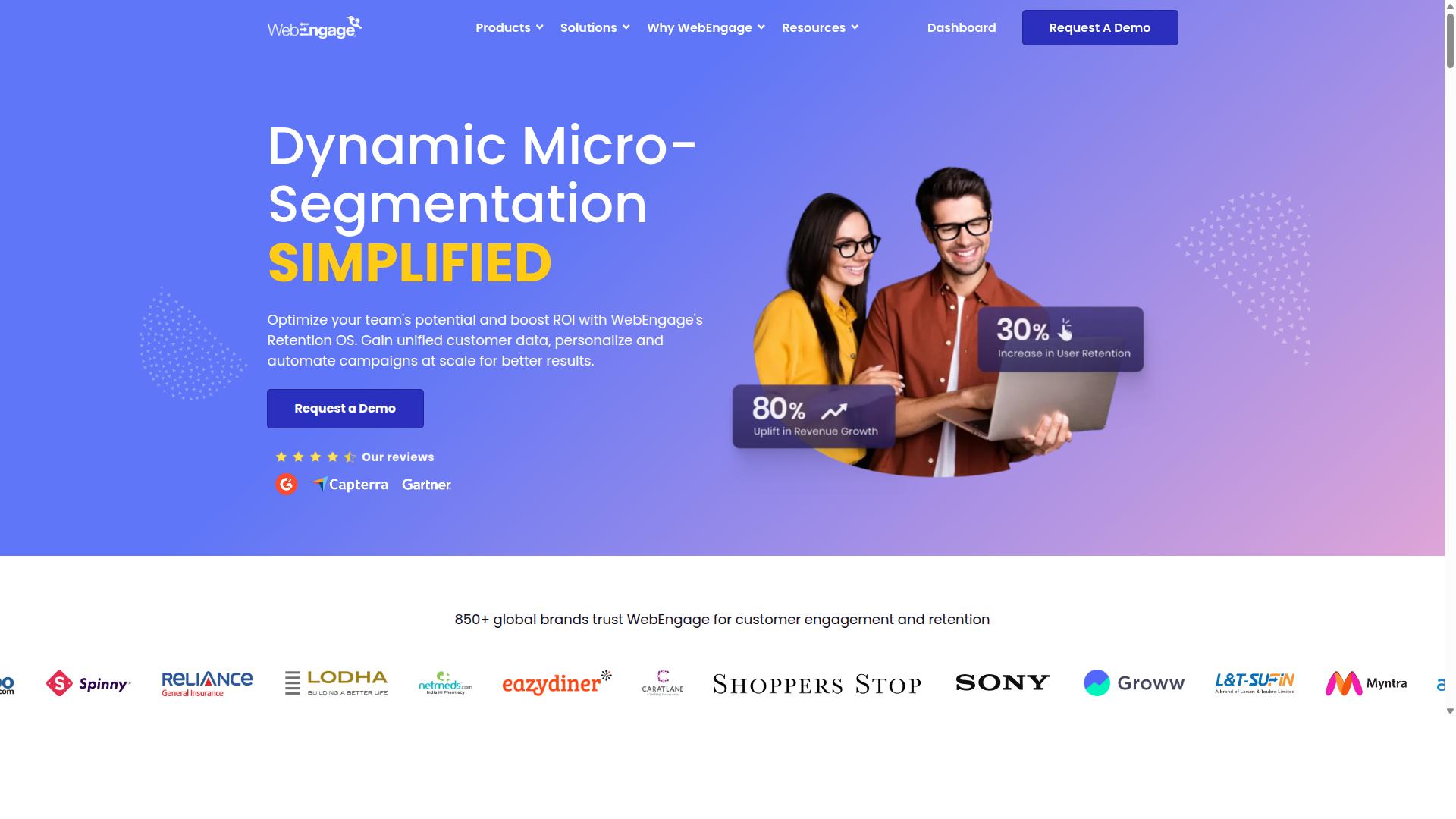
WebEngage is a marketing automation platform that excels at personalized WhatsApp campaigns for mid-to-large enterprises. The platform focuses on retention marketing, helping brands keep existing customers engaged through behavioral targeting and lifecycle-based communication.
What sets WebEngage apart is its dynamic variable system. You can build message templates that pull customer-specific data, such as purchase history or browsing behavior, directly from your CRM integration. This makes each bulk message feel like a one-on-one conversation rather than a broadcast.
The analytics dashboard provides deep insights into campaign performance. You can track delivery reports, open rates, and conversion metrics all in one place, which helps teams refine their automation strategies over time.
However, this power comes with trade-offs. WebEngage is positioned for mid-sized businesses and enterprise clients, and its pricing is on the higher end. Small businesses may find the platform overkill if they only need simple bulk messaging without complex lifecycle automation.
Pricing is available on request rather than published upfront. If you already have a mature marketing stack and need sophisticated personalization at scale, WebEngage deserves serious consideration. For simpler use cases, a lighter SaaS platform with REST API access may deliver better value.
8. Infobip
Infobip is a heavyweight in the CPaaS space, offering enterprise-grade WhatsApp solutions with global reach. The platform supports in-chat payments and maintains a massive international infrastructure built for organizations that operate across multiple regions and regulatory environments.
For custom integrations, Infobip provides a strong REST API with advanced automation features. Its message queue handles high-volume broadcasts efficiently, while built-in retry logic ensures failed deliveries get another attempt without manual intervention. This makes it a reliable choice for complex workflows that demand consistent delivery rates.
The platform excels at scale. Large enterprises sending millions of messages per week will find the infrastructure robust enough to handle peak loads. Delivery reports, webhooks, and session management tools are all present, giving developers the control they need for sophisticated bulk messaging campaigns.
However, Infobip is not the easiest solution for small businesses. The platform requires technical expertise to configure properly, and its pay-as-you-go pricing model can become costly for teams with modest messaging volumes. Smaller operations often find the learning curve steep and the feature set overwhelming for their needs.
For enterprises with dedicated development resources and substantial messaging requirements, Infobip is a credible option. Its global infrastructure and enterprise focus make it particularly well suited for organizations that prioritize reach and reliability over simplicity.
9. Growby
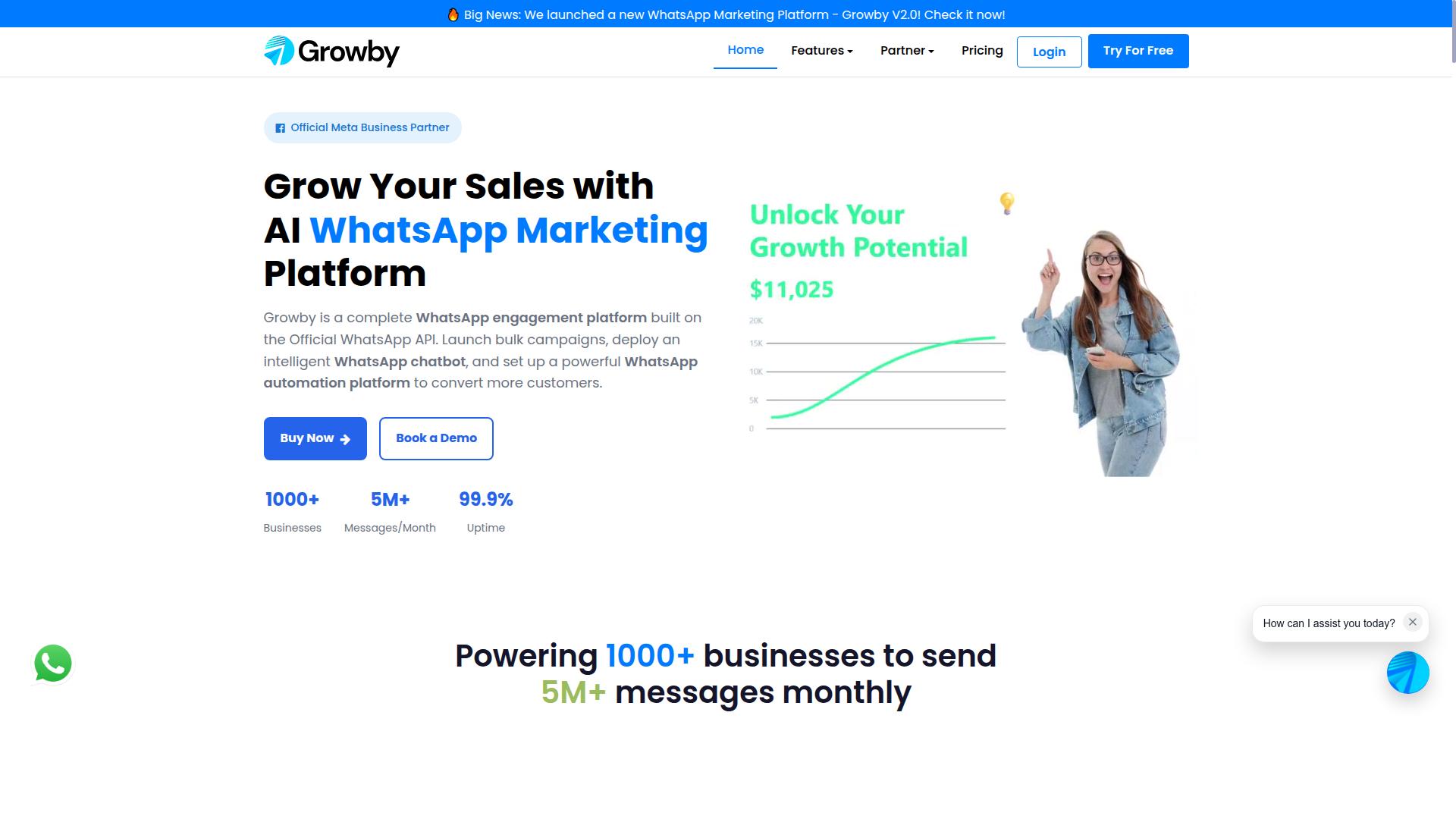
Growby is a simple, affordable tool for small businesses that want to send bulk WhatsApp messages without a steep learning curve. It positions itself as a lightweight option for teams that need basic broadcast capabilities without the complexity of enterprise-grade platforms.
The platform supports automated campaigns, AI chatbot creation, and Google Sheets integration, which makes it useful for simple contact management and data-driven messaging. Pricing starts at $27.57 per month, placing it on the lower end of the cost spectrum for WhatsApp bulk messaging tools.
Growby is best suited for basic broadcasts and straightforward campaigns where the message content stays consistent across your contact list. Small businesses running promotions, event reminders, or simple announcements will find the tool adequate for their needs.
However, Growby has clear limitations when compared to more robust enterprise platforms. The automation depth is narrower, and the integration ecosystem does not match the breadth offered by larger SaaS solutions or those with full WhatsApp Business API support.
Custom integration work, such as complex CRM integration or advanced webhook configurations, may require additional effort or external tools. Teams needing sophisticated message queues, dynamic variables, or granular role-based permissions should evaluate whether Growby's feature set aligns with their long-term requirements.
For businesses that prioritize low cost and ease of use over advanced functionality, Growby works well. It handles the essentials of bulk messaging without overwhelming users, making it a practical starting point before scaling to a more comprehensive platform.
10. AiSensy
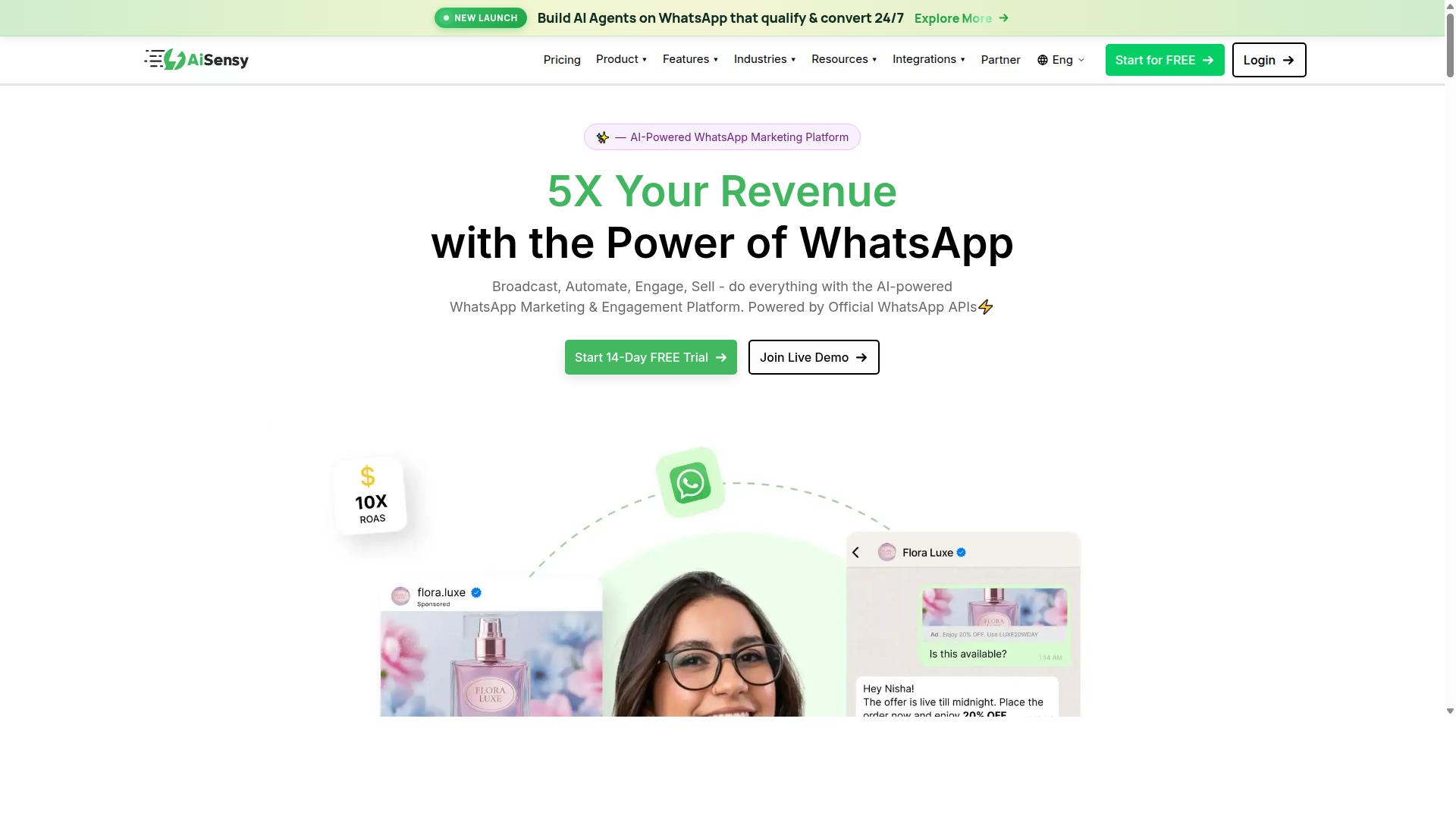
AiSensy is a popular choice for small to medium businesses in India, offering affordable WhatsApp marketing tools. The platform focuses on helping brands reach customers through the WhatsApp Business API without requiring deep technical expertise.
Setting up campaigns is straightforward, which makes AiSensy appealing for marketing teams that want quick results. Its template management system helps users organize approved message templates and reuse them across broadcasts, saving time during repetitive outreach.
Basic automation features cover common use cases like welcome messages and simple follow-ups. These work well for businesses that need consistent communication without building complex workflows from scratch.
However, AiSensy has limitations when it comes to advanced integration options. Teams that require deep custom integration with existing systems may find the available connectors restrictive compared to more developer-focused platforms.
Large enterprises with high message volumes might also hit scalability constraints. Research suggests that organizations with growing broadcast needs often outgrow tools designed primarily for SMB marketing campaigns, so it is worth evaluating your projected volume before committing.
For businesses in India seeking a straightforward bulk messaging solution with solid template support, AiSensy remains a credible option. Just be prepared to assess whether its automation depth and integration flexibility match your long-term roadmap.
How to Choose the Right Option
To pick the right WhatsApp bulk messaging solution, map your business size, technical expertise, and integration needs against the features you've learned. Start by being honest about who will actually build and maintain the system. A no-code team needs a SaaS platform with a visual interface, while a developer-heavy team can handle open-source tools or self-hosted options with a REST API.
Next, estimate your message volume and delivery patterns. Are you sending occasional broadcasts to a few hundred contacts, or thousands of personalized messages daily? High volume demands robust rate limiting, a message queue, concurrency controls, retry logic, and error handling built into the platform.
Evaluate your integration requirements before comparing prices. List every system that must connect: your CRM integration, e-commerce store, help desk, or analytics dashboard. Confirm the solution supports webhooks and API integration for real-time sync, not just manual CSV uploads. Check whether message templates, dynamic variables, and media attachment are available for rich, automated campaigns.
Budget matters, but so does scalability. A cheap plan that caps your contact list or limits multi-user access will force a migration later. Look for role-based permissions if several team members need access, and confirm the vendor can grow with you. Com.bot, for example, serves businesses ranging from small shops to government bodies needing multi-channel support across WhatsApp, Facebook, and Instagram.
Before you commit, ask every vendor these questions directly:
- Do you support the WhatsApp Business API and the WhatsApp Cloud API, or only a third-party provider?
- How does your platform handle opt-in consent and phone number validation?
- Can I see delivery reports and an analytics dashboard for each broadcast?
- What happens during a session management failure or an API outage?
- Is end-to-end encryption maintained for all messages sent through your system?
- What are your limits on message templates, concurrency, and message queue size?
- Can I test the platform with a free trial or sandbox environment?
Finally, match the solution to your real workflow, not the most impressive feature list. A simple broadcast tool is the right choice for occasional updates. But if you need order updates, payment collection, and automated customer support, prioritize a platform with proven multi-channel capabilities. The right fit saves your team hours every week and keeps your WhatsApp communication reliable at scale.
Final Verdict
For most businesses, Com.bot strikes the best balance of power, flexibility, and ease, making it the clear winner for custom integrations. Its combination of enterprise-grade security and real-time message delivery covers the full spectrum of bulk messaging needs.
Com.bot stands apart with 23,000+ active customers and processing 25M+ messages daily. As an official Meta Business Partner, it offers the reliability and compliance that custom integration projects demand.
For developers who want maximum control over every API call, Twilio remains a strong choice. Its REST API and webhook support give technical teams granular command over message queues, retry logic, and session management.
Small teams with simpler needs will find WATI a practical option. It handles opt-in consent, message templates, and CRM integration without requiring deep engineering resources.
Here is how the top three compare at a glance:
| Solution | Best For | Key Strength |
|---|---|---|
| Com.bot | Custom integrations at scale | Meta Business Partner, 25M+ messages daily |
| Twilio | Developer-heavy teams | Flexible REST API and webhook control |
| WATI | Small teams | Simple setup and easy broadcast tools |
Com.bot also serves 100+ government bodies and works with 500+ global partners, proving its capability in high-stakes environments. The platform has powered 100K+ bots created, showing real-world depth across automation use cases.
End-to-end encryption and no markup on WhatsApp conversations keep costs predictable and security strong. Quick setup and integration mean your team can move from planning to live broadcasts without lengthy deployment cycles.
If your priority is a bulk message sender that handles dynamic variables, media attachment, and delivery reports through a reliable API integration, Com.bot is the safest bet. Its track record speaks for itself.
For those ready to evaluate it firsthand, Com.bot offers a free trial to test the platform against your own requirements. You can also reach the sales team directly for a tailored walkthrough of the custom integration capabilities.